 86-312-8695888
 86-13722963501
 info@hbysindustry.com
-
 afrikkalainen
-
 albanialainen
-
 amhara
-
 arabialainen
-
 armenialainen
-
 Azerbaidžani
-
 baski
baski
-
 valkovenäläinen
-
 bengali
-
 bosnialainen
-
 bulgarialainen
-
 katalaani
-
 Cebuano
-
 Korsikalainen
-
 Kroatia
-
 Tšekki
-
 Tanskan kieli
-
 Hollannin kieli
-
 Englanti
-
 esperanto
-
 Virolainen
-
 Suomalainen
-
 Ranskan kieli
-
 friisi
-
 Galicialainen
-
 Georgian
-
 Saksan kieli
-
 kreikkalainen
-
 gudžarati
-
 Haitin kreoli
-
 hausa
hausa
-
 havaijilainen
-
 heprealainen
-
 Ei
Ei
-
 Miao
Miao
-
 Unkarin kieli
-
 islantilainen
-
 igbo
igbo
-
 Indonesialainen
-
 irlantilainen
-
 italialainen
-
 japanilainen
-
 jaavalainen
-
 kannada
-
 kazakki
-
 khmerit
-
 Ruanda
-
 Korealainen
-
 kurdi
kurdi
-
 Kirgisia
-
 TB
TB
-
 Latina
-
 Latvialainen
-
 liettualainen
-
 luxemburgilainen
-
 makedonialainen
-
 Malgashi
-
 malaiji
-
 malajalami
-
 maltalainen
-
 maori
maori
-
 marathi
-
 mongolialainen
-
 Myanmar
-
 Nepali
-
 Norjan kieli
-
 Norjan kieli
-
 Oksitaani
-
 pashto
-
 persialainen
-
 Kiillottaa
-
 Portugalin kieli
-
 Punjabi
-
 romanialainen
-
 Venäjän kieli
-
 samoalainen
-
 Skotlannin gaeli
-
 serbia
-
 Englanti
-
 Shona
Shona
-
 Sindhi
-
 sinhala
-
 Slovakian
-
 slovenialainen
-
 somali
-
 Espanja
-
 sundalainen
-
 swahili
-
 Ruotsin kieli
-
 Tagalog
-
 tadžiki
-
 tamili
-
 tatari
-
 telugu
-
 thaimaalainen
-
 turkkilainen
-
 Turkmenistan
-
 ukrainalainen
-
 urdu
urdu
-
 uiguuri
-
 uzbekki
-
 vietnam
-
 Walesin
-
 auta
auta
-
 jiddish
-
 joruba
-
 zulu
zulu


Understanding valve structure (gate valve)2.0
3.Functions of main parts of gate valve
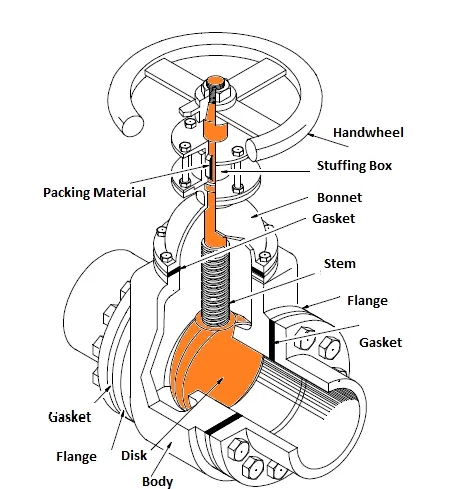
The valve body is the main part of the valve, which holds all the parts together. Most of the time, it is connected to the pipe through flanges and gaskets. It is the pressure boundary of the valve. The bonnet is the second boundary of pressure. It is connected to the valve body through bolts or flanges. The combination of valve stem, valve seat and valve disc is called valve trim. The performance of the valve depends on the arrangement of valve seat and valve disc. The valve seat and valve disc are the most important parts of the gate valve. It contains a gate and a valve seat that fits tightly with the gate. The valve stem connects the actuator and valve disc in the gate valve. Through it, the valve disc and valve seat can be opened and closed. There are two types of valve stems, one is the rising type, which rises when the valve is opened; the other is the non-rising type, which has no vertical movement. The valve actuator is a manual wheel that is used to operate the valve stem and valve disc.
4.Types of gate valves
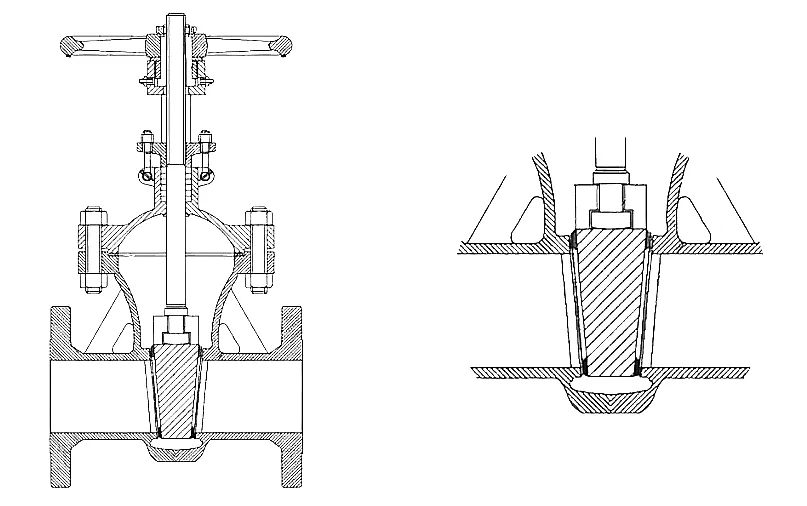
1) Solid wedge gate valve Solid wedge gate valve This is a very popular gate valve. It is suitable for almost all materials. A wedge-shaped disc is used here, which is installed on the valve seat. It is suitable for medium pressure conditions but not for high pressure conditions as it gets stuck due to high pressure, causing leakage. Sometimes, due to thermal expansion, the valve seat cannot open and gets stuck. This phenomenon is called heat bonding.
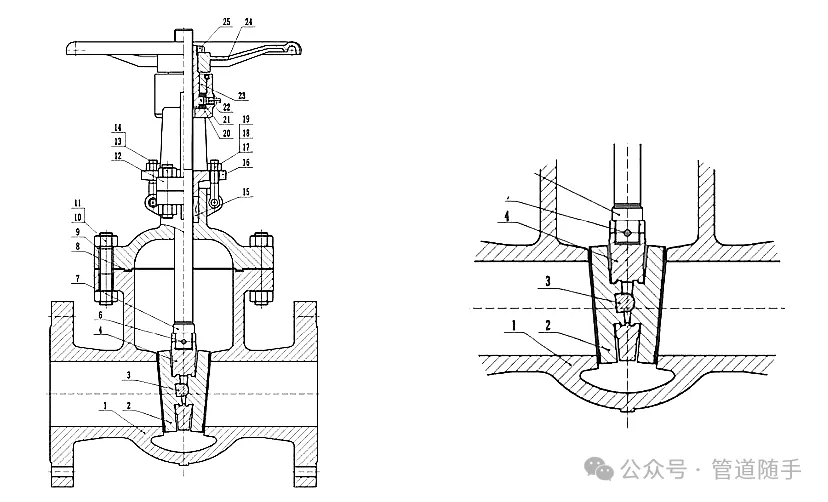
2) Parallel disk or Split gate valve This type overcomes the problem of heat bonding due to the free movement. Here, the two disks and the valve seat are held together by springs. It is suitable for low and medium pressure applications.
3) Flexible wedge gate valve It is a small cut in the disk that fits with the valve seat. With this cut, there is no leakage between the valve seat and the valve disk. It is used for steam applications.
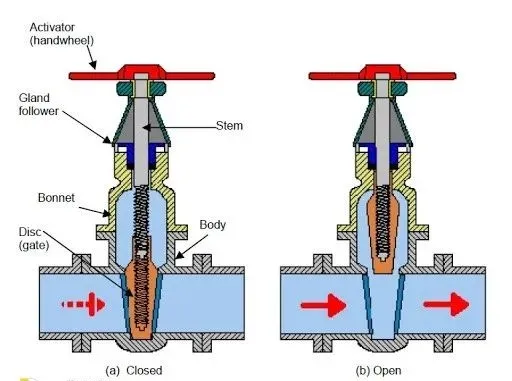
4) Non-rising stem and rising stem gate valves In rising stem (rising) gate valves, the valve stem rises when the gate valve is opened and falls when it is closed. In non-rising stem (non-rising) gate valves, the valve stem does not move vertically and is used when the space is small.
5.Advantages and Disadvantages of Gate Valve
Less resistance to fluid
Can be used for slurry and viscous liquids
Easy to maintain Opening and closing is very time-consuming
Throttling is very bad
-
Comprehensive Guide to China Pipe Laterals Fittings for Global Trade ApplicationsUutisetFeb.24,2026
-
China Extended Body Gate Valves A Comprehensive Guide To Selection And ApplicationUutisetFeb.11,2026
-
Comprehensive Guide to China 3 Inch Butterfly Valve Selection and ApplicationsUutisetJan.30,2026
-
Comprehensive Guide to Pipe Adaptors and Fittings for Efficient SystemsUutisetJan.28,2026
-
Comprehensive Guide to Pipe T Fittings for Plumbing and Fluid Transfer SystemsUutisetJan.28,2026
-
Comprehensive Guide to Union Pipe Fitting Selection and ApplicationsUutisetJan.27,2026
-
Comprehensive Guide to China Angle Globe Valves for Industrial ApplicationsUutisetJan.27,2026
 Finnish
 Afrikaans
  Albanian
  Amharic
  Arabic
  Armenian
  Azerbaijani
  Basque
  Belarusian
  Bengali
  Bosnian
  Bulgarian
  Catalan
  Cebuano
  Croatian
  Czech
Czech  Danish
  Dutch
Dutch  English Esperanto
  Estonian
  French
  Frisian
  Galician
  Georgian
  German
  Greek
Greek  Gujarati
  Hebrew
  Hindi
Hindi  Hungarian
  Icelandic
  Indonesian
  Italian
  Japanese
  Kannada
  Kazakh
  Khmer
Khmer  Korean
  Kurdish
  Lao
Lao  Latvian
  Lithuanian
  Macedonian
  Malay
Malay  Malayalam
  Marathi
  Mongolian
  Myanmar
  Nepali
  Norwegian
  Pashto
  Persian
  Polish
  Portuguese
  Panjabi
  Romanian
  Russian
  Scottish Gaelic
  Serbian
  Sinhala
  Slovak
  Slovenian
  Spanish
  Swahili
  Swedish
  Tagalog
  Tamil
Tamil  Tatar
Tatar  Telugu
  Thai
Thai  Turkish
  Ukrainian
  Urdu
Urdu  Uighur
  Uzbek
Uzbek  Vietnamese
  Welsh
Welsh