 86-312-8695888
 86-13722963501
 info@hbysindustry.com
-
 アフリカ人
アフリカ人
-
 アルバニア人
-
 アムハラ語
アムハラ語
-
 アラビア語
アラビア語
-
 アルメニア語
-
 アゼルバイジャン語
-
 バスク語
バスク語
-
 ベラルーシ語
-
 ベンガル語
ベンガル語
-
 ボスニア語
ボスニア語
-
 ブルガリア語
-
 カタルーニャ語
-
 セブアノ語
セブアノ語
-
 コルシカ島
コルシカ島
-
 クロアチア語
-
 チェコ語
チェコ語
-
 デンマーク語
-
 オランダの
オランダの
-
 英語
英語
-
 エスペラント
-
 エストニア語
-
 フィンランド語
-
 フランス語
フランス語
-
 フリジア語
フリジア語
-
 ガリシア語
ガリシア語
-
 ジョージア語
-
 ドイツ人
ドイツ人
-
 ギリシャ語
ギリシャ語
-
 グジャラート語
-
 ハイチ クレオール
-
 ハウサ語
ハウサ語
-
 ハワイアン
ハワイアン
-
 ヘブライ語
ヘブライ語
-
 いいえ
いいえ
-
 ミャオ族
ミャオ族
-
 ハンガリー語
-
 アイスランド語
-
 イボ語
イボ語
-
 インドネシア語
-
 アイルランド人
-
 イタリアの
イタリアの
-
 日本語
日本語
-
 ジャワ語
ジャワ語
-
 カンナダ語
カンナダ語
-
 カザフ語
カザフ語
-
 クメール語
クメール語
-
 ルワンダ語
ルワンダ語
-
 韓国語
韓国語
-
 クルド
クルド
-
 キルギス
キルギス
-
 結核
結核
-
 ラテン
ラテン
-
 ラトビア語
ラトビア語
-
 リトアニア語
-
 ルクセンブルク語
-
 マケドニアの
-
 マルガシ
マルガシ
-
 マレー語
マレー語
-
 マラヤーラム語
-
 マルタ語
マルタ語
-
 マオリ語
マオリ語
-
 マラーティー語
-
 モンゴル語
モンゴル語
-
 ミャンマー
ミャンマー
-
 ネパール語
ネパール語
-
 ノルウェー語
-
 ノルウェー語
-
 オック語
オック語
-
 パシュトゥー語
-
 ペルシア語
ペルシア語
-
 研磨
研磨
-
 ポルトガル語
-
 パンジャブ語
-
 ルーマニア語
-
 ロシア
ロシア
-
 サモア語
サモア語
-
 スコットランド・ゲール語
-
 セルビア語
セルビア語
-
 英語
英語
-
 ショナ
ショナ
-
 シンド語
シンド語
-
 シンハラ語
シンハラ語
-
 スロバキア語
-
 スロベニア語
-
 ソマリ語
ソマリ語
-
 スペイン語
スペイン語
-
 スンダ人
スンダ人
-
 スワヒリ語
スワヒリ語
-
 スウェーデンの
-
 タガログ語
タガログ語
-
 タジク語
タジク語
-
 タミル語
タミル語
-
 タタール語
タタール語
-
 テルグ語
テルグ語
-
 タイ語
タイ語
-
 トルコ語
トルコ語
-
 トルクメン語
-
 ウクライナ語
-
 ウルドゥー語
-
 ウイグル語
ウイグル語
-
 ウズベク語
ウズベク語
-
 ベトナム語
ベトナム語
-
 ウェールズ語
-
 ヘルプ
ヘルプ
-
 イディッシュ語
-
 ヨルバ語
ヨルバ語
-
 ズールー語
ズールー語


Ball Valve: Exquisite Design and Widely Used Flow Control Components
Ball valve, As an important flow control component widely used in industrial and civilian fields, it plays a key role in various fluid systems due to its simple structure, convenient operation, good sealing performance, and low pressure drop. This article will elaborate on the structure, working principle, characteristics, and application fields of ball valves to demonstrate their exquisite design and important practical value.
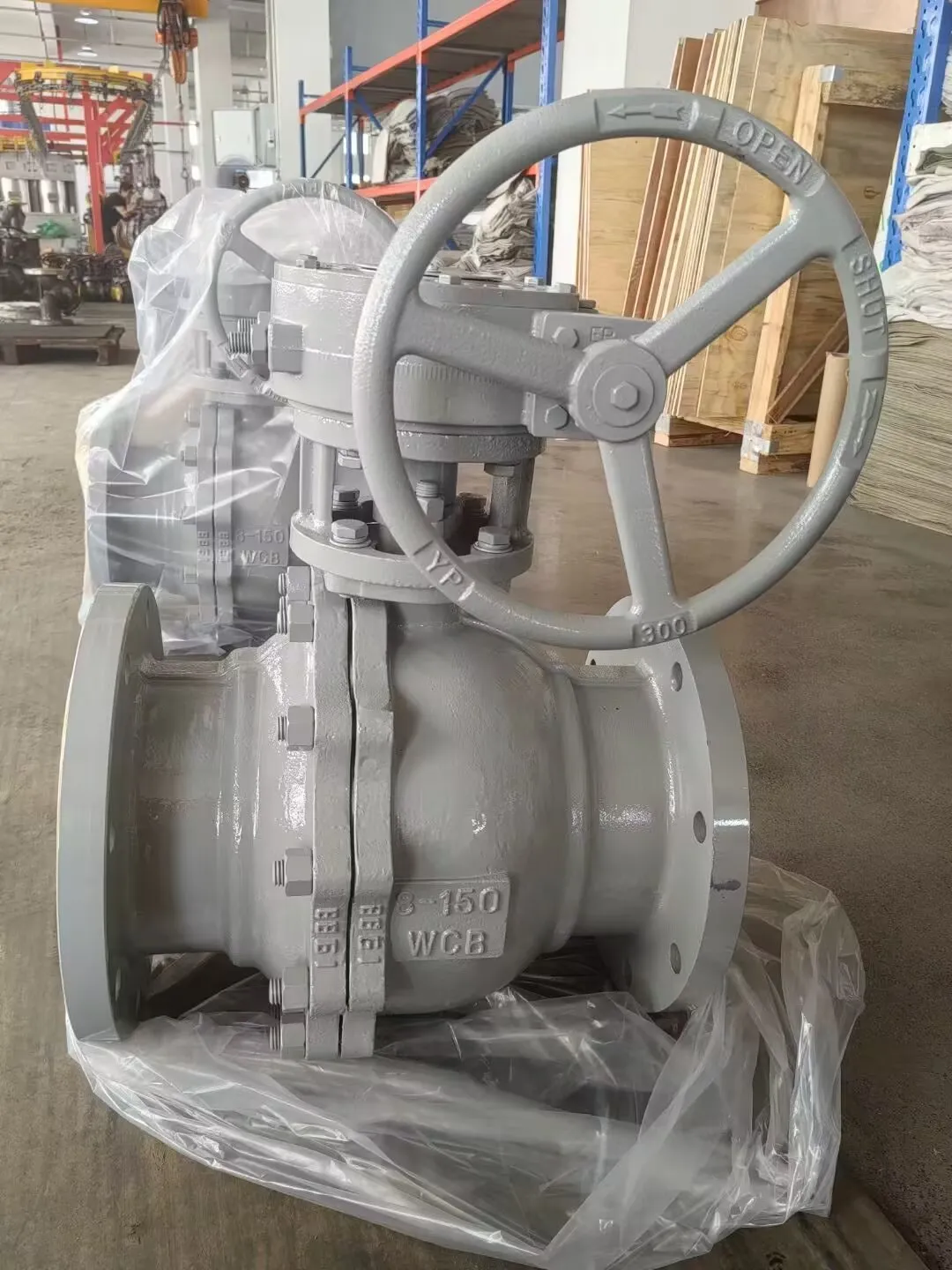
The core components of a ball valve
The core component of ball valve 3D is a sphere with a through-hole, which can be rotated to change the relative position between the through-hole and the pipeline, thereby achieving the circulation, cutoff, or flow regulation of the medium. Its basic structure usually includes a valve body, a valve ball, a valve stem, a sealing ring, and a driving device. According to the different valve body structures, ball valves can be divided into two-piece, three piece, and integral types; According to the sealing form, it can be divided into floating ball type and fixed ball type. Different structural designs adapt to different pressures, temperatures, and medium characteristics, expanding their application range.
The working principle of ball valve is intuitive and effective
When the through-hole on the sphere is parallel to the axis of the pipeline, the medium can pass smoothly and the valve is fully open. When the sphere rotates 90 degrees to make the through-hole perpendicular to the pipeline axis, the medium is completely cut off and the valve is in a closed state. By controlling the rotation angle of the sphere, precise adjustment of the flow rate can be achieved. For automatic control systems, 1 1 2 ball valves are usually equipped with pneumatic or electric drive devices, allowing them to be remotely controlled and improving the degree of automation.
The reason why ball valves can stand out among many valve types is due to their significant characteristics
Firstly, the opening and closing speed of the 1 2 ball valve is fast, and it can be fully opened or closed by simply rotating 90 degrees, with a quick response. Secondly, the fluid resistance of the ball valve is low, and there is almost no pressure loss when fully opened, which is beneficial for reducing energy consumption. In addition, the ball valve has good sealing performance, using flexible or metal seals to ensure zero leakage under different pressures and temperatures, ensuring the safe and stable operation of the system. Finally, the ball valve has a simple structure, is easy to maintain, and is easy to repair and replace, reducing maintenance costs.
Due to the aforementioned advantages, ball valves have been widely used in many fields
In the petrochemical industry, 1 2 inch ball valve are used to transport and control various oils, gases, and chemical media. In the water treatment industry, ball valves are used to regulate water flow and control the direction of water flow. In the food and beverage industry, ball valves need to meet hygiene requirements and are usually made of stainless steel to control the flow of raw materials and products. In HVAC systems, ball valves are used to control the circulation of hot and cold water and regulate indoor temperature. Even in the aerospace industry, the presence of ball valves can be seen, used to control the fuel system of aircraft.
In summary, ball valve is a well-designed and powerful flow control component. With its advantages of simple structure, easy operation, good sealing, low pressure drop, and low maintenance cost, ball valves play an irreplaceable role in various industries. With the continuous development of industrial technology, people's requirements for fluid control are also increasing. We believe that the design and application of ball valves will continue to innovate to adapt to more complex and demanding working conditions, and continue to provide guarantees for the development of various industries.
Ball Valve FAQs
What is a ball valve?
A ball valve is a valve that controls fluid flow by rotating a sphere. There is a through-hole in the middle of the sphere, and when the through-hole aligns with the flow channel, the valve is in the open state; When the sphere rotates 90 ° and the through-hole is perpendicular to the flow channel, the valve closes. The ball valve has the characteristics of fast opening and closing and good sealing performance.
What are the main advantages of a ball valve?
Quick opening and closing: simply rotate 90 ° to complete the opening and closing operation.
Good sealing performance: The ball valve has excellent sealing performance and is suitable for high-pressure and high vacuum applications.
Low flow resistance: The flow channel of the full bore ball valve has the same diameter as the pipeline, resulting in extremely low fluid resistance.
Strong durability: The ball valve has a simple structure and a long service life.
Suitable for multiple media: can be used for various media such as gas, liquid, slurry, etc.
What are the drawbacks of ball valves?
Not suitable for regulating flow: Ball valves are mainly used for fully open or fully closed operations, and are prone to vibration and wear when partially opened.
High cost: Compared to butterfly valves or gate valves, the manufacturing cost of ball valves is higher.
Large volume: Especially for high-pressure ball valves, they have a large volume and weight.
What are the main application areas of ball valves?
Ball valves are widely used in the following fields:
Oil and gas industry: used for fluid control in pipelines.
Chemical industry: used for controlling corrosive media.
Water treatment system: used for water supply and drainage systems.
Food and pharmaceutical industry: used in places with high hygiene requirements.
Power industry: used for boilers and steam systems.
What are the common types of ball valves?
According to their structure and function, ball valves are mainly divided into the following types:
Floating ball valve: The ball is tightly pressed against the sealing ring under the pressure of the medium, suitable for small and medium-sized, low-pressure applications.
Fixed ball valve: The ball is fixed on the valve seat, suitable for high-pressure and large-diameter applications.
Full bore ball valve: The diameter of the flow channel is the same as the diameter of the pipeline, with low flow resistance, suitable for situations where complete flow is required.
Shrinkage ball valve: The diameter of the flow channel is smaller than the diameter of the pipeline, making it suitable for situations where flow velocity needs to be reduced.
V-shaped ball valve: The ball has a V-shaped notch, which can be used to adjust the flow rate and is suitable for situations that require precise control.
-
Comprehensive Guide to China Pipe Laterals Fittings for Global Trade ApplicationsニュースFeb.24,2026
-
China Extended Body Gate Valves A Comprehensive Guide To Selection And ApplicationニュースFeb.11,2026
-
Comprehensive Guide to China 3 Inch Butterfly Valve Selection and ApplicationsニュースJan.30,2026
-
Comprehensive Guide to Pipe Adaptors and Fittings for Efficient SystemsニュースJan.28,2026
-
Comprehensive Guide to Pipe T Fittings for Plumbing and Fluid Transfer SystemsニュースJan.28,2026
-
Comprehensive Guide to Union Pipe Fitting Selection and ApplicationsニュースJan.27,2026
-
Comprehensive Guide to China Angle Globe Valves for Industrial ApplicationsニュースJan.27,2026
 Japanese
 Afrikaans
  Albanian
  Amharic
  Arabic
  Armenian
  Azerbaijani
  Basque
  Belarusian
  Bengali
  Bosnian
  Bulgarian
  Catalan
  Cebuano
  Croatian
  Czech
Czech  Danish
  Dutch
Dutch  English Esperanto
  Estonian
  Finnish
  French
  Frisian
  Galician
  Georgian
  German
  Greek
Greek  Gujarati
  Hebrew
  Hindi
Hindi  Hungarian
  Icelandic
  Indonesian
  Italian
  Kannada
  Kazakh
  Khmer
Khmer  Korean
  Kurdish
  Lao
Lao  Latvian
  Lithuanian
  Macedonian
  Malay
Malay  Malayalam
  Marathi
  Mongolian
  Myanmar
  Nepali
  Norwegian
  Pashto
  Persian
  Polish
  Portuguese
  Panjabi
  Romanian
  Russian
  Scottish Gaelic
  Serbian
  Sinhala
  Slovak
  Slovenian
  Spanish
  Swahili
  Swedish
  Tagalog
  Tamil
Tamil  Tatar
Tatar  Telugu
  Thai
Thai  Turkish
  Ukrainian
  Urdu
Urdu  Uighur
  Uzbek
Uzbek  Vietnamese
  Welsh
Welsh