 86-312-8695888
 86-13722963501
 info@hbysindustry.com
-
 afrikalik
-
 alban
alban
-
 Amhar
Amhar
-
 arabcha
-
 arman
arman
-
 ozarbayjon
-
 bask
bask
-
 belarus
-
 bengal
-
 bosniyalik
-
 bolgar
-
 katalon
-
 Sebuano
-
 Korsika
-
 xorvat
-
 chex
chex
-
 Daniya
-
 golland
-
 Ingliz
-
 Esperanto
-
 eston
eston
-
 fin
fin
-
 frantsuz
-
 frizcha
-
 Galisian
-
 gruzin
-
 nemis
nemis
-
 yunoncha
-
 Gujarati
-
 Gaiti kreoli
-
 hausa
hausa
-
 gavayilik
-
 ibroniy
-
 yoq
yoq
-
 Miao
Miao
-
 venger
-
 island
-
 igbo
igbo
-
 indonez
-
 irland
-
 italyancha
-
 yapon
yapon
-
 yava
yava
-
 Kannada
-
 qozoq
qozoq
-
 kxmer
kxmer
-
 Ruanda
-
 koreys
-
 kurd
kurd
-
 qirg'iz
-
 sil kasalligi
-
 lotin
lotin
-
 latviyalik
-
 litva
litva
-
 Lyuksemburgcha
-
 makedon
-
 Malgashi
-
 malay
malay
-
 Malayalam
-
 malta
malta
-
 maori
maori
-
 marati
-
 mo'g'ul
-
 Myanma
-
 Nepal
Nepal
-
 norveg
-
 norveg
-
 oksitan
-
 Pushtu
-
 forscha
-
 polyak
-
 portugal
-
 panjob
-
 rumin
rumin
-
 rus
rus
-
 Samoa
Samoa
-
 Shotlandiya gael tili
-
 serb
serb
-
 Ingliz
-
 Shona
Shona
-
 Sindhi
-
 Sinhala
-
 slovak
-
 sloven
-
 Somali
-
 ispancha
-
 sundan
-
 suahili
-
 shvedcha
-
 Tagalog
-
 tojik
tojik
-
 Tamil
Tamil
-
 tatar
tatar
-
 Telugu
-
 tay
tay
-
 turkcha
-
 turkman
-
 ukrain
-
 urdu
urdu
-
 uyg'ur
-
 o'zbek
-
 Vetnam
-
 uels
uels
-
 Yordam
-
 Yahudiy
-
 Yoruba
-
 Zulu
Zulu


Check Valve Lift Type: Best Low-Leakage, Durable Choice?
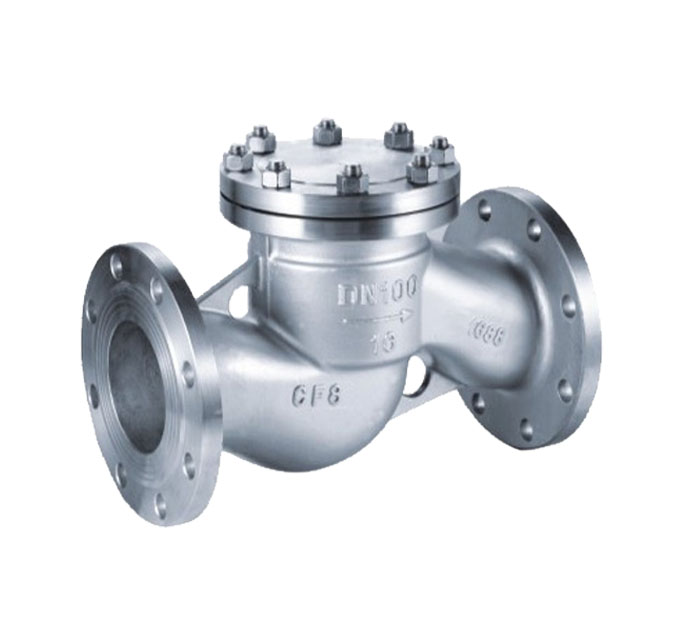
H41W-16/25/40P、R Stainless Steel Lifting Check Valve: Field Notes, Specs, and Real-World Lessons
If you’ve ever chased down backflow headaches on a hot line, you already know why a good [check valve lift type] can make or break reliability. I’ve seen plants stick with swing checks out of habit, then quietly switch after a few steam-hammer incidents. The H41W-16/25/40P、R stainless steel lifting check valve from Baoding (Hebei, China) is one of those practical, under-the-radar workhorses that keeps utilities and chemical units humming.

What’s trending in lift-type check valves
Three things: stainless everywhere (corrosion is expensive), tighter QA with traceability (PMI and heat numbers), and smarter selection for media—nitrics and acetics are pushing buyers toward CF3M/316L trims. To be honest, the shift isn’t flashy, but unplanned downtime is a line item nobody wants.

Core specs at a glance
| Model | H41W-16/25/40P、R (Stainless Steel Lifting Check Valve) |
| Size (Caliber) | DN15–DN600 |
| Pressure Class | 1.6–25 MPa (PN16–PN250) |
| Medium Temp. | ≤ 425 °C |
| Media | Water, steam, oil, nitric acid, acetic acid, etc. |
| Body/Trim | Stainless steel (e.g., 304/316; CF8/CF8M variants on request) |
| Connection | Flanged (GB/T National Standard) |
| Testing | Hydrostatic shell/seat per GB/T and API 598; ISO 5208 seat criteria |
Quick note on installation: lift checks excel on horizontal runs and work on vertical lines with upward flow. Cracking pressure is low, but not zero—engineers sometimes undersize a step to ensure prompt closure in pulsing services.
How it’s built: materials, methods, tests
Origin: North Guzhuangying Village, Ansu Town, Xushui District, Baoding, Hebei, China. Casting or precision investment casting body, CNC machining, guide-bushing alignment, and hard-faced disc seat (options). PMI on incoming SS, heat treatment as needed, seat lapping, then hydro tests. Standards followed include GB/T 13927 and API 598 for pressure testing; ISO 9001 QMS is typical for facilities of this scale (ask for the current certificate copy).
In-plant sample data (typical, ≈ real-world may vary): DN50, PN40, shell test 60 bar for 2 min, no seep; seat test at 44 bar, 0 ml/min soft-seat and within API 598 metal-seat allowance. Life tests report ≥100,000 open/close cycles on water at ambient—steam and acid duty will be lower, naturally.
Application scenarios
- Chemicals: nitric/acetic lines where swing checks pit or stick.
- Steam and condensate headers up to 425 °C.
- Oil and process utilities, pump discharge backflow protection.
- Food & pharma utilities (with proper material and finish options).
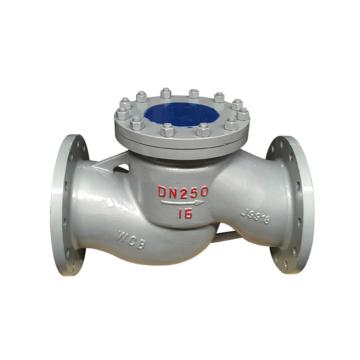
Many customers say the [check valve lift type] design gives a crisper shutoff in pulsating flows versus flappers—less chatter when sized sensibly.
Vendor comparison (field-shortlist view)
| Item | HBYS H41W | Generic Import | Premium EU Brand |
|---|---|---|---|
| Material traceability | Heat# + PMI (on request) | Varies | Full 3.1/3.2 |
| Testing standard | GB/T, API 598, ISO 5208 | API 598 (≈) | API 598 + extras |
| Lead time | ≈ 2–5 weeks | 4–8 weeks | 8–12 weeks |
| Cost | Value-focused | Low–mid | High |
Customization and services
Options: CF8/CF8M/CF3M, hard-facing (Stellite) seats, special gaskets, NACE-like material selection for sour media, and bespoke face-to-face per GB/T. Documentation pack can include MTC 3.1, hydro test records, and dimensional checks. For corrosives, ask about polished internals and tighter ISO 5208 rates. Yes, the [check valve lift type] format can be tuned.
Case notes
- DN80, PN40 on nitric acid: swapped a swing check after seat grooving; H41W CF3M version cut reverse-leak to non-detect in API 598 seat test.
- Boiler feed bypass, DN50 steam: lift-disc design reduced chatter; operators reported quieter starts and fewer hammer events after two weeks. Anecdotal, but consistent.
Final tip: select by media, temperature, and velocity—then verify test criteria. Overlook velocity and even the best [check valve lift type] will complain.
Authoritative citations
- API 598 – Valve Inspection and Test.
- ISO 5208 – Industrial valves — Pressure testing of metallic valves.
- GB/T 13927 – Industrial valves — Pressure testing.
- GB/T 12224 – General requirements for steel valve materials.
-
Comprehensive Guide to China Pipe Laterals Fittings for Global Trade ApplicationsYangiliklarFeb.24,2026
-
China Extended Body Gate Valves A Comprehensive Guide To Selection And ApplicationYangiliklarFeb.11,2026
-
Comprehensive Guide to China 3 Inch Butterfly Valve Selection and ApplicationsYangiliklarJan.30,2026
-
Comprehensive Guide to Pipe Adaptors and Fittings for Efficient SystemsYangiliklarJan.28,2026
-
Comprehensive Guide to Pipe T Fittings for Plumbing and Fluid Transfer SystemsYangiliklarJan.28,2026
-
Comprehensive Guide to Union Pipe Fitting Selection and ApplicationsYangiliklarJan.27,2026
-
Comprehensive Guide to China Angle Globe Valves for Industrial ApplicationsYangiliklarJan.27,2026
 Uzbek
Uzbek Afrikaans
  Albanian
  Amharic
  Arabic
  Armenian
  Azerbaijani
  Basque
  Belarusian
  Bengali
  Bosnian
  Bulgarian
  Catalan
  Cebuano
  Croatian
  Czech
Czech  Danish
  Dutch
Dutch  English Esperanto
  Estonian
  Finnish
  French
  Frisian
  Galician
  Georgian
  German
  Greek
Greek  Gujarati
  Hebrew
  Hindi
Hindi  Hungarian
  Icelandic
  Indonesian
  Italian
  Japanese
  Kannada
  Kazakh
  Khmer
Khmer  Korean
  Kurdish
  Lao
Lao  Latvian
  Lithuanian
  Macedonian
  Malay
Malay  Malayalam
  Marathi
  Mongolian
  Myanmar
  Nepali
  Norwegian
  Pashto
  Persian
  Polish
  Portuguese
  Panjabi
  Romanian
  Russian
  Scottish Gaelic
  Serbian
  Sinhala
  Slovak
  Slovenian
  Spanish
  Swahili
  Swedish
  Tagalog
  Tamil
Tamil  Tatar
Tatar  Telugu
  Thai
Thai  Turkish
  Ukrainian
  Urdu
Urdu  Uighur
  Vietnamese
  Welsh
Welsh